Short description
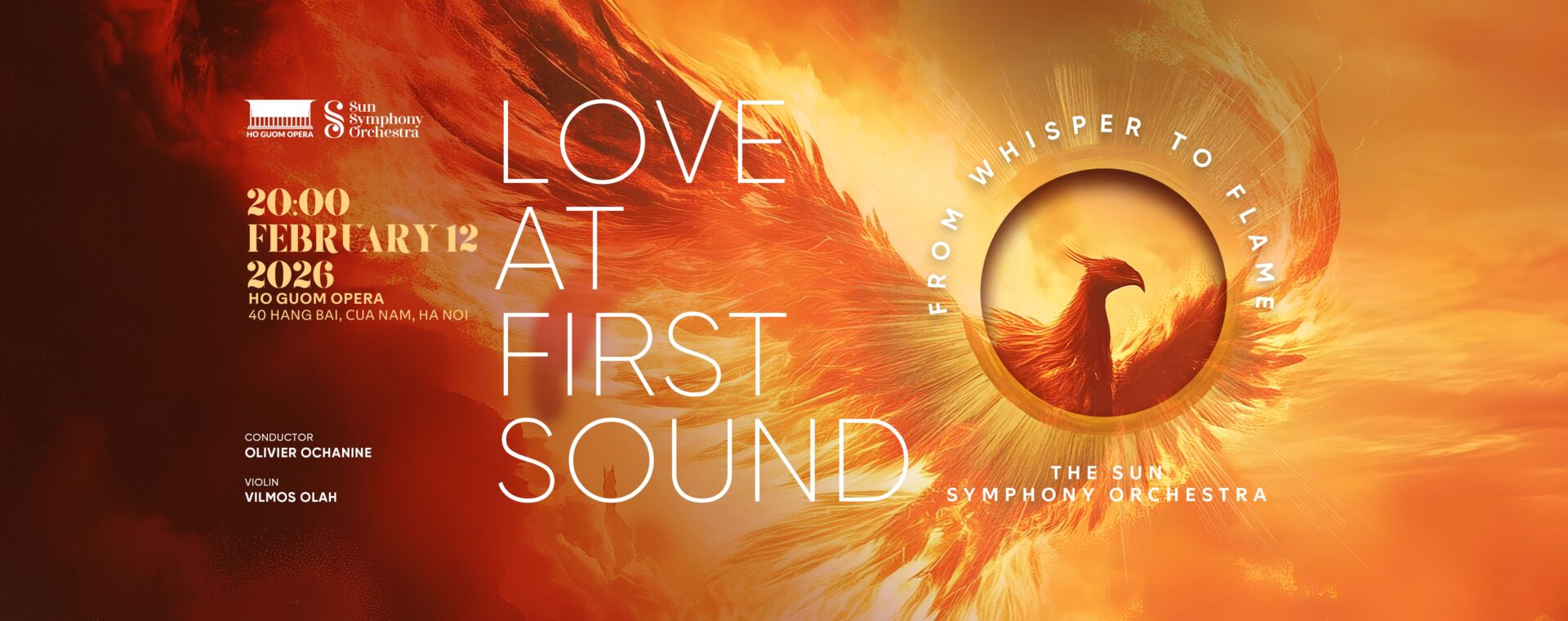
This concert is about how love enters us through listening. Through the intimacy and fragility of Fauré, Massenet, Shostakovich to the obsession and emotional force of Tchaikovsky, we immerse ourselves in transformation and release of Stravinsky’s Firebird. At our concert, love is not seen first — it is heard. And once heard, it cannot be unheard.
Part I
Gabriel Fauré
Pelléas et Mélisande, Op. 80 – Suite from the incidental music
Jules Massenet
Méditation (from the opera Thaïs)
Vilmos Olah, violin
Dmitri Shostakovich
Romance from The Gadfly, Op. 97 (from the film The Gadfly)
Vilmos Olah, violin
— INTERMISSION —
Part II
Pyotr Ilyich Tchaikovsky
Francesca da Rimini, Op. 32 Symphonic Fantasy after Dante
Igor Stravinsky
The Firebird Suite (1919) from the ballet L’Oiseau de feu
Pelléas et Mélisande, Op. 80
Gabriel Fauré
In 1898, Fauré composed incidental music for Maurice Maeterlinck’s symbolist drama Pelléas et Mélisande – a play where emotions are rarely spoken aloud and tragedy unfolds as if inside a dream. Fauré understood this world perfectly. Rather than theatrical gestures, he wrote music of atmosphere, restraint, and luminous subtlety.
The harmonies drift gently, the orchestration avoids sharp edges, and the melodies feel like distant memories rather than declarations. The famous Sicilienne sways with nostalgic grace, while La mort de Mélisande seems suspended in time, expressing grief through fading color rather than dramatic climax.
This is music that invites us inward. It does not narrate – it breathes.
⸻
Méditation from Thaïs
Jules Massenet
Appearing between scenes in Massenet’s opera Thaïs, this celebrated violin solo represents a moment of spiritual transformation. The courtesan Thaïs begins to turn away from a life of sensual luxury toward inner reflection and repentance.
The orchestra recedes into a halo of sound while the violin sings with intimate simplicity. The beauty lies not in virtuosity but in purity of line and breath. After Fauré’s dreamlike world, this music feels like a quiet prayer.
⸻
Romance from The Gadfly, Op. 97
Dmitri Shostakovich
Written in 1955 as part of a film score, this Romance reveals an unexpectedly tender side of Shostakovich. The solo violin carries a melody of disarming sincerity, supported by a transparent orchestral texture that feels suspended in memory.
It has a cinematic quality – nostalgic, lyrical, and quietly tragic – as if recalling something beautiful that can never return. This piece bridges French introspection and Russian emotional depth.
⸻
Francesca da Rimini, Op. 32
Pyotr Ilyich Tchaikovsky
Inspired by Dante’s Inferno, Tchaikovsky’s symphonic fantasia tells the story of Francesca and Paolo, lovers condemned to eternal torment in a whirlwind of Hell. The opening storm is one of the most violent orchestral passages in the repertoire, out of which emerges a love theme of aching tenderness before the tempest returns with devastating force.
Here, love is no longer reflective – it is catastrophic. The orchestra becomes elemental: wind, fire, and fate.
⸻
The Firebird Suite (1919)
Igor Stravinsky
When The Firebird premiered in Paris in 1910 for the Ballets Russes, Stravinsky was almost unknown. By the end of the evening, he was a sensation. Drawing on Russian folklore, the ballet tells of Prince Ivan, the magical Firebird, and the defeat of the evil sorcerer Kashchei.
The suite moves from shadowy mystery to flickering brilliance, from the savage rhythms of the Infernal Dance to the hypnotic stillness of the Berceuse. Out of this calm rises a noble horn melody that grows into one of the most radiant finales in all orchestral music.
Darkness dissolves into light. The spell is broken. Renewal triumphs.