Short description
Music rarely develops in isolation. Every generation of composers inherits traditions from the past while seeking a voice of its own. Tonight’s programme traces an extraordinary musical journey across two continents and three generations, following a line of influence from Johannes Brahms to Antonín Dvořák and ultimately to Charles Ives.
Johannes Brahms (1833–1897)
Academic Festival Overture, Op. 80
Antonín Dvořák (1841–1904)
American Suite, Op. 98b
-Intermission-
Charles Ives (1874–1954)
Symphony No. 2
Johannes Brahms (1833–1897)
Academic Festival Overture, Op. 80
When the University of Breslau awarded Johannes Brahms an honorary doctorate in 1879, the composer was expected to respond with a suitably solemn work of gratitude. Instead, he surprised everyone with one of the most exuberant and light-hearted pieces of his career.
The Academic Festival Overture is built from several traditional German student songs, culminating in the famous Gaudeamus igitur (“Therefore, let us rejoice”), the centuries-old academic anthem. What might have been a simple ceremonial piece becomes, in Brahms’ hands, a dazzling orchestral celebration filled with wit, warmth, and remarkable contrapuntal craftsmanship.
Although festive in spirit, the overture displays all the qualities that define Brahms’ mature style: rich orchestral textures, impeccable construction, and a masterful balance between intellectual rigor and joyful expression. It serves as an ideal opening to a programme that celebrates both tradition and the passing of artistic inspiration from one generation to the next.
⸻
Antonín Dvořák (1841–1904)
American Suite, Op. 98b
In 1892, Antonín Dvořák moved to New York to become director of the National Conservatory of Music. Captivated by the vast landscapes and cultural diversity of the United States, he became convinced that America possessed all the ingredients necessary to develop its own great musical tradition.
The American Suite was originally composed for solo piano during Dvořák’s stay in America and later orchestrated after his return to Europe. Unlike the New World Symphony, it contains no direct quotations of American folk melodies. Instead, Dvořák evokes the spirit of America through broad, open melodies, spacious harmonies, lively dances, and a sense of optimism that reflects his impressions of a young and rapidly growing nation.
Throughout the five movements, Dvořák’s unmistakable Bohemian lyricism blends seamlessly with his fascination for the New World. The result is music that is both deeply personal and quietly visionary—a portrait not of America itself, but of the possibilities Dvořák believed it represented.
⸻
Charles Ives (1874–1954)
Symphony No. 2
If Dvořák imagined what American concert music could become, Charles Ives showed what it might sound like.
Raised in New England by his father George Ives—a Civil War bandmaster who delighted in musical experimentation—Ives grew up surrounded by church hymns, marching bands, patriotic songs, and the sounds of everyday American life. These experiences became the foundation of a musical language unlike any heard before.
Composed between 1897 and 1902, the Second Symphony stands at the crossroads of European tradition and American originality. Echoes of Beethoven, Brahms, and Dvořák can be heard throughout the work, yet Ives fills the score with fragments of hymns, fiddle tunes, patriotic melodies, and popular songs, weaving them together into a vivid musical portrait of America.
The symphony culminates in one of the most famous endings in orchestral literature. Just as the music appears ready for a triumphant conclusion, Ives punctuates the final chord with an unexpected burst of dissonance—a mischievous musical wink that startled audiences at the work’s belated premiere in 1951, nearly fifty years after it had been composed.
Today, the Second Symphony is recognized as one of the earliest masterpieces of American orchestral music, bridging the European symphonic tradition with the bold individuality that would define American composers in the twentieth century.
⸻
About Tonight’s Programme
The three works performed this evening form more than a sequence of orchestral masterpieces—they tell the story of an artistic inheritance.
Brahms nurtured the genius of Dvořák. Dvořák inspired a generation of American composers to discover their own musical identity. Charles Ives transformed that vision into something entirely new, creating music that embraced the sounds, memories, and spirit of America while pointing toward the future.
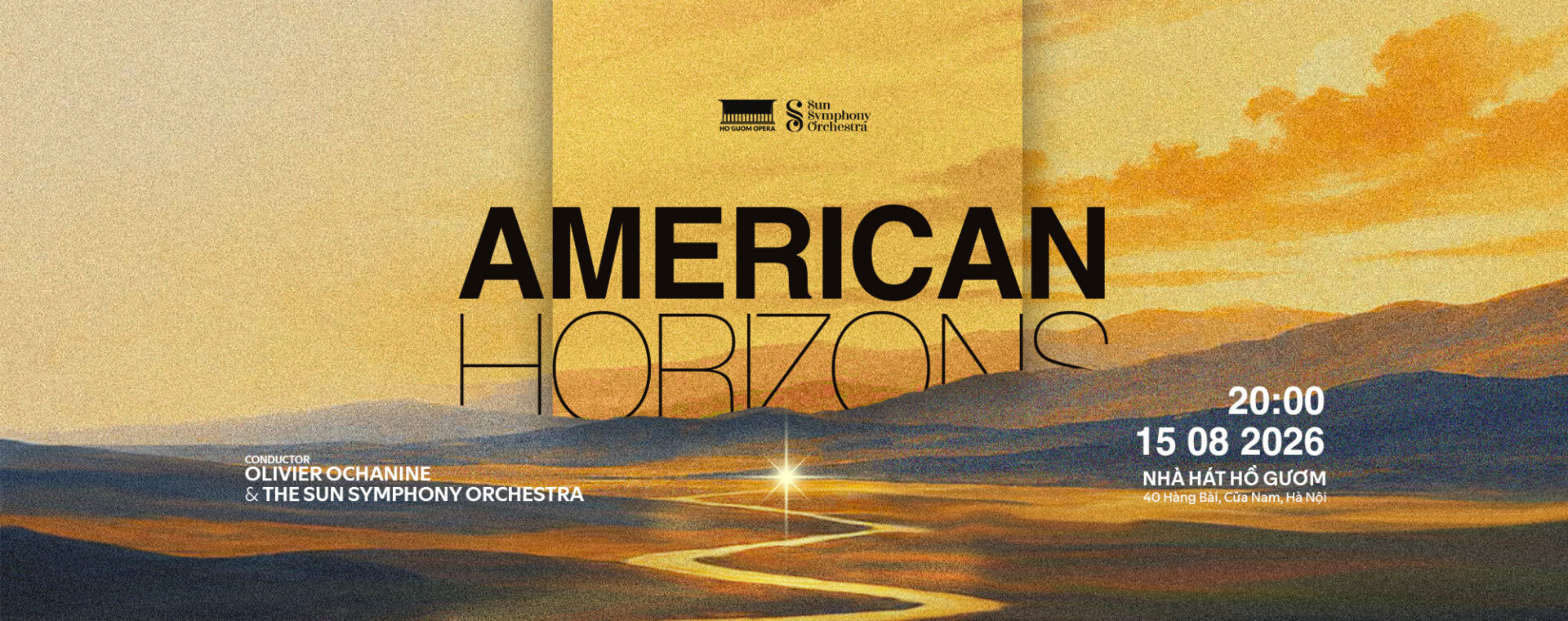
Together, these works trace the expanding horizon of the symphonic tradition—from Europe to the New World, and from established tradition to fearless innovation. That journey is the essence of American Horizons.